

How Smart Film is Bringing Green Technology, Privacy, and Energy Savings to Modern Buildings
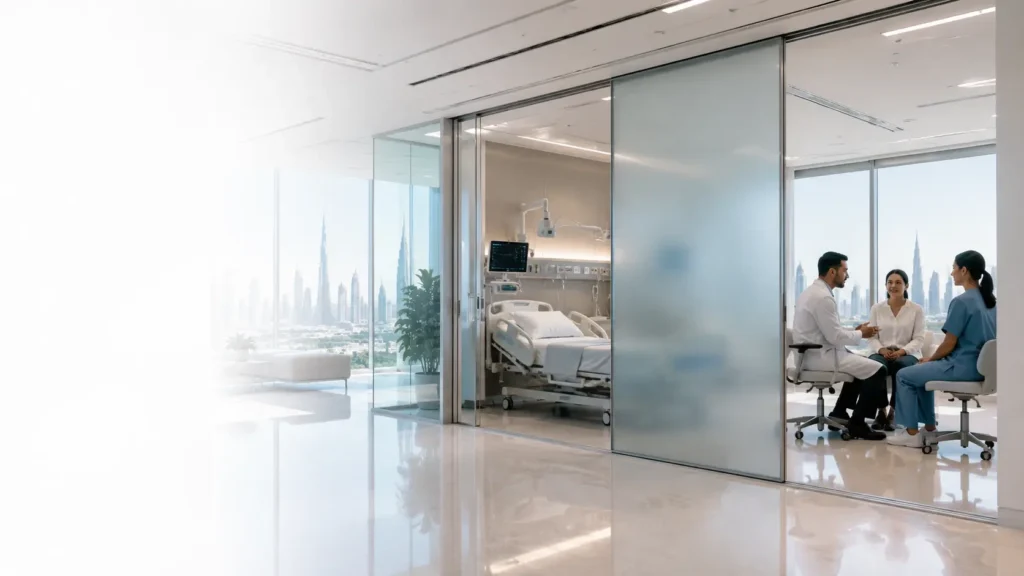
Modern buildings use an enormous amount of energy. Cooling, lighting, and glass façades all add up, and building energy use is a major share of global emissions.
At the same time, offices and homes need privacy. Meeting rooms, consultation spaces, and street-facing glass all face the same problem: how do you get natural light without giving up control over who sees in?
Sustainability targets add another layer of pressure. Owners are expected to cut energy use, but full window replacement is expensive and disruptive.
Smart film solves a lot of this in one thin layer. It’s a switchable film applied directly to existing glass, turning ordinary windows into on-demand privacy and heat-control surfaces, without removing a single pane.
This article explains what smart film is, how it works, and why it’s become a practical retrofit option for modern buildings. You’ll learn how it saves energy, improves privacy, and fits into green building goals, especially in a climate like Dubai’s.
Why Modern Buildings Need Smarter Glass Solutions
Cooling costs keep rising. Glass buildings, in particular, absorb heat all day and pass much of it straight into the air conditioning system.
Older façades weren’t designed with today’s energy targets in mind. Many still rely on single glazing, dated tint, or nothing more than blinds and curtains.
Privacy is a separate, constant issue. Conference rooms, ground-floor offices, and healthcare spaces all need a way to switch from open to private, quickly and without fuss.
Sustainability goals sit on top of all this. Owners now need to show measurable progress on energy use, not just good intentions.
Replacing glass to meet these goals is slow and costly. That’s exactly the gap smart film is built to close.
What Is Smart Film?
Smart film, also called switchable film or PDLC film, is a thin, self-adhesive layer applied directly onto existing glass. It uses Polymer Dispersed Liquid Crystal (PDLC) technology to switch the glass between clear and frosted, in a fraction of a second.
How It Works
Inside the film are microscopic liquid crystal droplets, suspended in a polymer layer. With no power, the crystals scatter randomly, and the glass looks milky and opaque.
Apply a low-voltage current, and the crystals line up. Light passes straight through, and the glass turns clear.
Most films use very little power to run, roughly a few watts per square metre when switched on, and nothing at all in the opaque state.
Retrofitting Existing Glass
This is what sets smart film apart. It bonds onto glass that’s already installed, so there’s no demolition, no new panes, and no scaffolding outside the building.
A full smart glass replacement can take days per opening and needs exterior access. Smart film is applied directly to the inside surface, in a fraction of the time.
Difference From Blinds
Blinds and curtains take up space, collect dust, and wear out. Smart film sits flat against the glass, with no moving parts and no fabric to clean.
Switching from clear to private takes a fraction of a second, at the touch of a button or an app.
Difference From Smart Glass
Smart glass has the switching layer sealed between two panes of glass at the factory. Smart film is applied afterward, to glass that’s already in place.
That makes film faster to install and considerably cheaper. Factory-laminated smart glass typically carries a longer warranty, but for existing buildings, film is usually the more practical option.
How Smart Film Supports Green Technology
Energy Efficiency
Smart film cuts down on solar heat and glare passing through a window, which reduces the load on cooling systems. That’s a direct energy saving, without touching the building’s structure.
Heat Reduction
Some smart film products are designed to reflect infrared light, keeping interior temperatures noticeably cooler than untreated glass. Manufacturers report meaningful drops in indoor surface temperature under direct sun, though the exact figure depends on the film and glass type.
Lower HVAC Usage
Less heat coming through the glass means less work for the air conditioning system. Over a full year, that adds up to a real reduction in HVAC run-time, especially in buildings with large glazed areas.
Reduced Carbon Footprint
Lower cooling demand means lower electricity use. In a grid still transitioning to cleaner sources, every unit of energy saved at the building level reduces the emissions tied to that building.
Natural Daylight
Smart film doesn’t block light out completely, even in its clear state. Most products let 80 to 90 percent of visible light through, so interiors stay bright without needing extra artificial lighting.
How Smart Film Improves Privacy
Privacy is where smart film earns its keep day to day.
Offices use it on glass partitions, letting teams switch a room from open-plan to private in an instant.
Meeting rooms benefit most visibly. A room can look transparent and modern between meetings, then turn opaque the moment a confidential discussion starts.
Healthcare settings use switchable film for patient consultation rooms, where privacy compliance matters as much as good lighting.
Residential spaces use it on bathroom glass, home offices, and street-facing windows, replacing blinds with a cleaner, more modern look.
Hospitality venues use it in hotel rooms and spa areas, giving guests instant control over privacy without heavy curtains.
Smart Film and Energy Savings
Cooling is the single biggest recurring cost for most buildings in hot climates. Anything that reduces solar heat gain feeds straight into lower electricity bills.
Air conditioning systems run less often, and for shorter periods, when less heat is entering through the glass in the first place. That reduces both energy use and wear on the equipment itself.
Over time, those savings add up. Retrofitting with smart film costs a fraction of full glass replacement, so the payback period is typically much shorter.
For owners focused on sustainability reporting, that combination, lower energy use and lower upfront cost, is hard to match with any other single retrofit.
Applications in Modern Buildings
- Commercial Offices — partitions and meeting rooms that switch between open and private on demand.
- Corporate Headquarters — executive offices and boardrooms that need a premium, flexible look.
- Government Buildings — public-facing areas that need controllable privacy without heavy security glass.
- Hotels — guest rooms, spa areas, and bathrooms where instant privacy replaces bulky curtains.
- Residential Towers — bathrooms, home offices, and balcony doors upgraded without replacing windows.
- Educational Buildings — classrooms and labs that need daylight, privacy, and lower energy use together.
Smart Film in Dubai’s Green Building Future
Dubai’s sustainability targets are becoming more specific about measurable performance, not just intent. Smart film fits several of these frameworks directly, especially as a low-disruption retrofit.
Dubai Clean Energy Strategy 2050 targets 75 percent clean energy by 2050, with an intermediate target of roughly 25 to 30 percent by 2030. Reducing building-level energy demand, including through retrofits like smart film, directly supports that transition.
Dubai’s Green Building Regulations and Al Sa’fat, run by Dubai Municipality, rate buildings from Bronze to Platinum. Energy performance carries the heaviest weighting of any category, making façade upgrades like smart film a practical way to improve an existing building’s score.
LEED, the international green building standard, credits reduced energy consumption and improved indoor environmental quality. Retrofits that lower solar heat gain and glare can support both categories.
Estidama, Abu Dhabi’s own green building framework, is often referenced alongside Al Sa’fat across the UAE, since many consultants apply similar glazing and energy principles in both emirates.
Smart Cities initiatives across Dubai are increasingly tracking building-level performance data as part of wider city efficiency goals, which puts retrofits like smart film on the radar for asset owners managing older stock.
Industry Statistics
Cooling dominates energy use in the region. Multiple UAE studies and utility bodies place air conditioning at 60 to 85 percent of total electricity use in buildings during summer months. Any measure that cuts solar heat gain, including window film, feeds directly into that number.
Building energy use is a major share of global emissions. Industry estimates put building energy consumption at close to 40 percent of global emissions. That’s why retrofitting existing buildings, not just designing efficient new ones, matters so much for climate targets.
Switchable film uses very little power to operate. Most PDLC films draw only a few watts per square metre when active, and nothing when left in the opaque state. Covering an entire room in switchable film can use less electricity than a single desk lamp.
Film is significantly cheaper than full glass replacement. Industry pricing typically puts smart film at a fraction of the cost of factory-laminated smart glass, with installation measured in hours rather than days. That cost gap is a major reason retrofits are growing faster than new-build smart glass installations.
Films block the large majority of UV light. Most switchable and solar films block over 98 percent of UV transmission, which protects interior finishes and reduces a secondary source of indoor heat gain.
Conclusion
Modern buildings face a real challenge: cut energy use, meet sustainability targets, and still give occupants privacy and daylight, without an expensive glass replacement.
Smart film addresses all three at once. It retrofits onto existing glass, switches between clear and private in an instant, and reduces the solar heat gain driving up cooling costs.
As green building requirements tighten and owners look for lower-disruption ways to upgrade older stock, switchable film is likely to become a standard retrofit choice rather than a niche one, especially in hot, glass-heavy markets like Dubai.
If you’re considering smart film for an office, hotel, or residential project in Dubai, IF Smart Glass can talk through where it fits best in your building and what results to expect.
Request a consultation, get a project-specific quotation, or talk through your building’s requirements with our team.
FAQs: Everything You Need to Know About Smart Film in the UAE
What is smart film, and how does it work?
Smart film is a switchable material that changes transparency with electrochromic or photochromic technology, offering privacy, light control, and temperature regulation.
How does smart film contribute to sustainability?
By reducing energy consumption for cooling and lighting, smart film aligns with the UAE’s sustainability goals and reduces carbon footprints.
Can smart film be retrofitted?
Yes, it can be easily applied to existing windows or partitions, making it a flexible option for renovations.
Is smart film cost-effective?
Though the initial installation is an investment, it leads to long-term savings in energy bills and enhances property value.
How does smart film improve comfort?
It allows users to control light, privacy, and glare, creating personalized, comfortable environments.
Where is smart film most commonly used?
From residential spaces and offices to hotels and hospitals, smart film is versatile and adaptable to various needs.
Does smart film help meet green certifications?
Yes, it supports certifications like LEED and Estidama by improving energy efficiency and aligning with sustainability standards.
What’s the lifespan of smart film?
With proper care, smart film can last 15–20 years, making it a durable and sustainable choice.
Is smart film suitable for Dubai’s climate?
Absolutely. Smart film is designed to withstand extreme heat while enhancing energy efficiency, making it ideal for the UAE.
Why should developers in the UAE consider smart film?
Smart film combines luxury, sustainability, and functionality, giving properties a competitive edge in the real estate market.
Innovative Smart Glass Features
Privacy Control
Energy Efficiency
UV Protection
Interactive Surfaces
Sound Insulation
Customisable Designs
How Does Smart Glass Improve Your Experience In Homes?
Smart glass renders instant privacy at the touch of a button while pouring in the natural light to illuminate your living settings. Visit your nearby store or explore our website to stay updated about the latest trends in smart glass.