

Architectural Lightscaping with Smart Glass: A New Era of Ambient Control
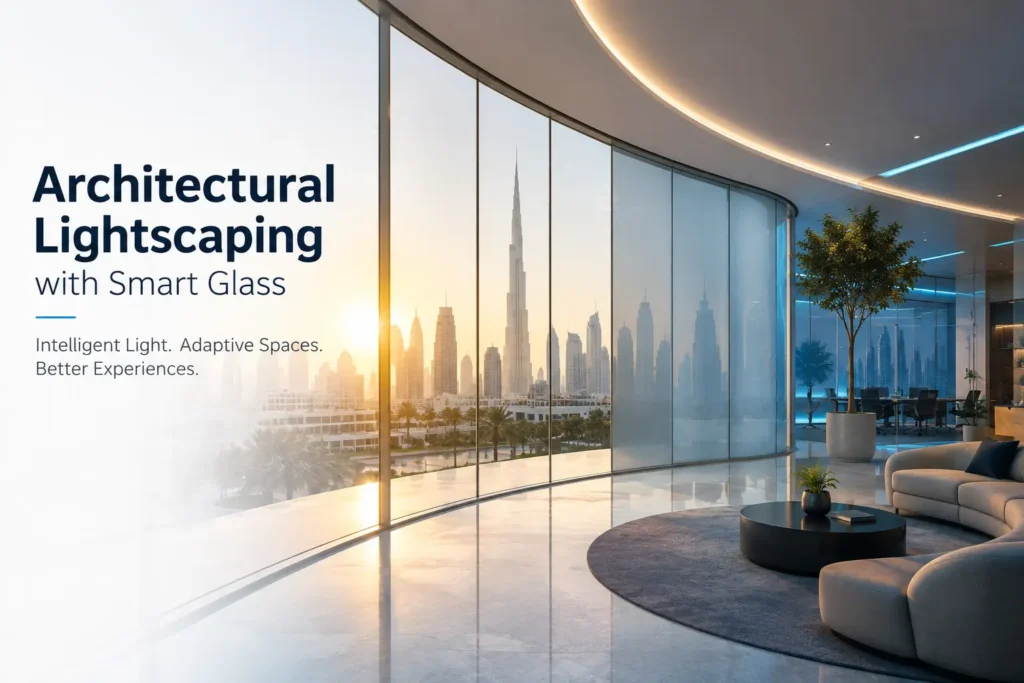
Step into a building where the sunlight behaves intelligently. Morning rays pour in gently, energizing the space without overwhelming it. By noon, the glass has subtly adjusted—no harsh glare, no uncomfortable heat, just balanced brightness that feels natural. As evening approaches, it clears again, welcoming the soft warmth of dusk. No manual adjustments. No mechanical blinds. Just light, managed seamlessly.
This is the essence of Architectural Lightscaping—a design philosophy that’s transforming how we experience built environments. And at its heart lies Smart Glass, a technology that converts ordinary windows and partitions into responsive, adaptive surfaces.
What is Architectural Lightscaping?
Architectural Lightscaping refers to the deliberate design and manipulation of light—both natural and artificial—to create spaces that are functional, aesthetically pleasing, and supportive of human well-being. Rather than treating lighting as a secondary consideration, this approach positions it as a foundational design element, alongside structure, materials, and spatial planning.
Imagine it as terrain shaping, but with illumination. Instead of molding earth, you’re guiding how light flows through a space:
- Natural daylight serves as the primary resource, not a constraint
- Daylight design considers intensity, angle, and timing throughout the day
- Ambient environments evolve with the sun’s position, weather conditions, and human presence
- Visual comfort takes precedence over maximum brightness
The outcome? Interiors that feel dynamic. Spaces that adapt. Buildings that respond to their environment.
How Smart Glass Enables Intelligent Ambient Control
Smart Glass is the enabling technology behind Architectural Lightscaping. Three primary systems lead the market: PDLC, SPD, and electrochromic glass—each offering distinct capabilities.
PDLC (Polymer Dispersed Liquid Crystal): Transitions instantly from transparent to frosted. Ideal for privacy applications—bathroom enclosures, conference rooms, hotel suites. Light continues to pass through, but visibility is obscured.
SPD (Suspended Particle Device): Provides adjustable tinting, dimming progressively from clear to nearly opaque. Suited for building facades, skylights, and spaces requiring precise light modulation. Can block up to 99% of incoming light.
Electrochromic Glass: Tints gradually in response to electrical voltage or sunlight intensity. Excellent for solar control—minimizing heat gain and glare while maintaining outward views. Capable of reducing solar heat transmission by up to 90%.
Collectively, these technologies deliver ambient control that can be instant, automated, or user-directed—tailored to project requirements.
Dynamic Daylight Management
Smart Glass doesn’t merely respond—it anticipates. Dynamic Daylight Management means the building adjusts to the sun’s trajectory, cloud patterns, and occupancy without requiring manual input.
Early morning: Glass remains transparent, flooding interiors with invigorating daylight. This minimizes dependence on artificial lighting and promotes alertness.
Midday intensity: As the sun reaches its peak, Smart Glass tints automatically. Glare vanishes. Heat accumulation slows. Views stay unobstructed.
Late afternoon: Glass lightens once more, inviting softer illumination for a welcoming, relaxed atmosphere.
Weather adaptation: Overcast conditions? The system maintains clarity. Sudden sunshine? It tints within moments.
Practical illustration: A commercial high-rise in Dubai documented a 55% reduction in cooling expenses following Smart Glass installation—while preserving sweeping views and removing the need for window treatments. Another analysis showed that Smart Glass eliminated intolerable glare at every occupant position—achieving what conventional shading systems could not.
Human-Centric Lighting and Occupant Comfort
Human-Centric Lighting reorients the question from “how bright is the space?” to “how does this lighting affect people?” It acknowledges that light influences more than visibility—it shapes情绪, energy levels, sleep patterns, and long-term health.
Smart Glass advances Human-Centric Lighting through:
- Visual comfort: Removing harsh glare while preserving access to natural illumination.
- Mood support: Exposure to natural daylight correlates with reduced stress and enhanced emotional well-being.
- Performance enhancement: Well-lit, glare-free environments improve concentration and decrease fatigue.
- Circadian alignment: Morning light exposure helps synchronize the body’s internal clock, improving sleep quality and overall health.
- Wellness benefits: Increased daylight exposure—up to 25% more in certain Smart Glass buildings—has been associated with improved immune function and reduced blood pressure.
No technical jargon. No unsupported claims. Simply design that aligns with how humans naturally experience light.
Why UAE Architecture Is Adopting Smart Glass
The UAE’s urban landscape showcases glass architecture—soaring facades, expansive windows, and luxury interiors that embrace transparency. However, in a desert environment, glass presents challenges: intense heat, persistent glare, and significant cooling requirements.
Smart Glass addresses these challenges while supporting the region’s architectural vision:
- Heat mitigation: Smart Glass blocks up to 95% of solar heat in its darkest state, substantially reducing air conditioning demands.
- Glass-intensive design: Landmark towers and luxury developments depend on Smart Glass to ensure comfort without compromising aesthetics.
- Premium experiences: Five-star hotels, private residences, and executive offices utilize Smart Glass for immediate privacy, contemporary elegance, and seamless automation.
- Sustainability objectives: Smart Glass supports UAE Green Building Regulations, Net Zero ambitions, and energy efficiency requirements.
- Smart city initiatives: As Dubai and Abu Dhabi advance their intelligent infrastructure, responsive architecture becomes essential.
Notable figures:
- Cooling peak load reductions of 20–26% in west- and south-facing zones
- 17–25% lower lighting energy compared to standard glazing
- Up to 40% total building energy savings through intelligent daylight and thermal management
Architectural Applications
Luxury Hotels
Smart Glass elevates guest experiences—providing instant privacy in bathrooms, unobstructed views from balconies, and automated ambient control in suites.
Offices
From conference rooms to open-plan floors, Smart Glass removes glare, enhances focus, and creates modern, minimalist aesthetics without blinds or curtains.
Private Residences
Luxury homes employ Smart Glass for expansive facades that remain comfortable throughout the year, with privacy on demand and meaningful energy savings.
Healthcare Facilities
Patient rooms, intensive care units, and consultation areas benefit from Smart Glass’s capacity to provide privacy, support restorative environments, and reduce maintenance.
Retail Environments
Smart Glass enables dynamic brand experiences—modulating light on product displays, creating VIP privacy zones, and enhancing the overall shopping atmosphere.
Benefits of Architectural Lightscaping
Architectural Lightscaping with Smart Glass delivers tangible value:
- Optimized natural daylight utilization
- Immediate privacy when required
- Energy efficiency (up to 40% reduction)
- Glare elimination and reduced eye strain
- Decreased cooling demand (20–26% peak reduction)
- Clean, contemporary aesthetics
- Superior visual comfort
- Design flexibility without blinds or shades
Smart Glass for New Construction and Renovations
For new builds, Smart Glass integrates during the design phase—into facades, atriums, skylights, and interior glazing. For existing structures, Smart Film offers a retrofit solution, applying switchable technology to current glass without replacement. Both approaches enable Architectural Lightscaping in any scenario.
The Future of Ambient Control
The next generation of Smart Glass is fully intelligent. Artificial intelligence will forecast sunlight patterns and adjust tint levels proactively. IoT integration will connect windows to building management systems, lighting, and HVAC for fully autonomous environments.
Buildings are becoming responsive organisms—adapting to weather, occupancy, and time of day. Smart Glass is central to this transformation.
Conclusion
Architecture is no longer static. Light is no longer merely functional. Together, they’re becoming intelligent, adaptive, and human-focused.
Smart Glass makes Architectural Lightscaping achievable—creating healthier, more beautiful, and more sustainable buildings. From hotels to offices, residences to healthcare, technology is redefining possibilities.
FAQs: Smart Glass & Smart Film
1. What is architectural lightscaping?
Architectural lightscaping is the strategic use of natural and artificial lighting to define and enhance a space’s design. It focuses on how light interacts with architectural elements to create atmosphere, highlight features, and improve functionality, making spaces both visually appealing and dynamic.
2. How does smart glass work?
Smart glass uses special technologies like PDLC or SPD to change opacity in response to electrical signals or environmental factors.
3. Can smart glass save energy?
Yes! By reducing the need for HVAC systems and artificial lighting, smart glass can lower energy consumption by up to 30%.
4. Is smart glass suitable for the UAE climate?
Absolutely! Smart glass blocks harmful UV rays and reduces heat gain, making it perfect for the UAE’s hot and sunny environment.
5. Can I add smart film to existing windows?
Yes, smart film can be easily applied to your current windows, transforming them into smart glass without the need for expensive renovations. It’s a cost-effective solution to enhance privacy and light control in any space.
6. What are the benefits of smart glass in hotels?
It enhances guest comfort by providing privacy, reducing glare, and controlling ambient light all while being energy-efficient.
7. Is smart glass durable?
Yes, smart glass is built to be highly durable, resistant to high temperatures, UV exposure, and everyday wear and tear. It’s designed to maintain its functionality and aesthetic appeal over time, ensuring long-lasting performance in any environment.
8. Can smart glass be integrated with home automation systems?
Absolutely! Smart glass can be easily integrated with home automation systems such as Alexa, Google Home, and KNX, allowing you to control light, privacy, and ambiance with a simple voice command or app. This creates a fully connected, convenient experience.
9. Does smart glass block UV rays?
Yes, smart glass blocks up to 99% of harmful UV rays, helping to protect your interiors from sun damage.
10. How does smart glass contribute to sustainability?
Smart glass reduces energy consumption, lowers cooling costs, and helps meet green building certifications, supporting sustainability efforts.
Innovative Smart Glass Features
Privacy Control
Energy Efficiency
UV Protection
Interactive Surfaces
Sound Insulation
Customisable Designs
How Does Smart Glass Improve Your Experience In Homes?
Smart glass renders instant privacy at the touch of a button while pouring in the natural light to illuminate your living settings. Visit your nearby store or explore our website to stay updated about the latest trends in smart glass.